On a typical winter day, you step outside with your bare hands to retrieve your mail.
When you get home, your fingertips are white, almost waxy, and suddenly become blue, leaving you wondering what’s going on.
Is this just the cold? Is this a hint of something deeper? If this sounds similar, it may be Raynaud’s syndrome. And it is time to quit missing out.
When the cold causes a serious obstruction in your fingers.
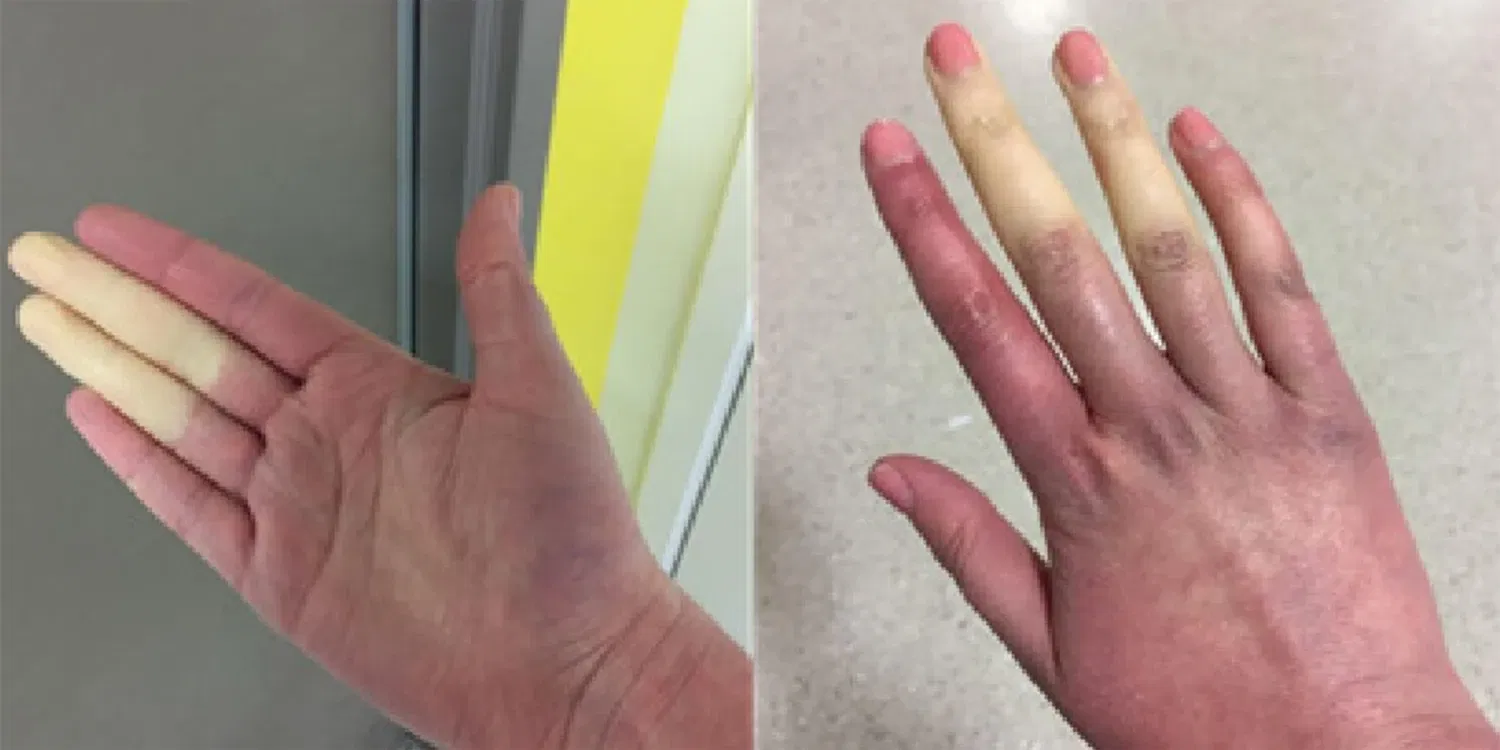
Raynaud’s syndrome isn’t just a winter nuisance. It’s a circulatory disorder in which the small arteries that supply blood to the skin constrict excessively in the face of cold… or even stress.
This occurrence, called vasospasm , momentarily limits blood flow to some regions of the body, mainly the fingers and toes.
The outcome : a quick and dramatic discoloration . Once warmed, the ends turn white or blue before returning to their original hue. This can last a few minutes, or up to fifteen minutes.
What symptoms should I look for?
Dr. James O’Donovan, a health and aging specialist, warns about the syndrome’s typical symptoms:
Color change: As the skin warms, it changes from white to blue and occasionally to red.
The sensation of extreme cold in the fingers or toes.
Numbness, tingling, or transient loss of sensation.
Other parts may be impacted, such as the nose, lips, or ears.
Most people experience moderate symptoms, which are unpleasant but not dangerous. However, in other circumstances, they may signify a more significant health issue.
When should you worry?
Raynaud’s syndrome is not usually a standalone condition. It can occur as a complication of various conditions, notably autoimmune diseases. Here are the occasions why a medical consultation is necessary:
If the symptoms are extremely severe or intensify over time.
If you are over 40 and experiencing this for the first time.
If just one hand or foot is afflicted.
If you also have joint discomfort, rash, or muscular weakness.
If, even after warming, a region remains pale, uncomfortable, or numb for several hours.
An often neglected element is that a ring caught on a swollen finger can swiftly lead to complications and a medical emergency.
What do you do in a crisis?
The first thing to do is gradually warm your extremities. Put your hands in your pockets, gently blow on them, or soak them in warm water (not hot, to avoid thermal shock).
Also, take some basic steps to prevent crises:
Protect yourself from the cold by wearing gloves, thick socks, and hand warmers.
Reduce stress, as this can also cause symptoms.
Avoid coffee, smoke, and certain vasoconstrictor medicines, which might worsen spasms