You can always count on locating me within my garden. I have a passion for gardening. Observing the fruits of your labor and the progress of plants is truly rewarding. Nevertheless, let’s be honest – it can be quite challenging. Dealing with pests is a major hurdle. At times, it’s hard to distinguish between beneficial insects and those that could potentially destroy all your efforts.

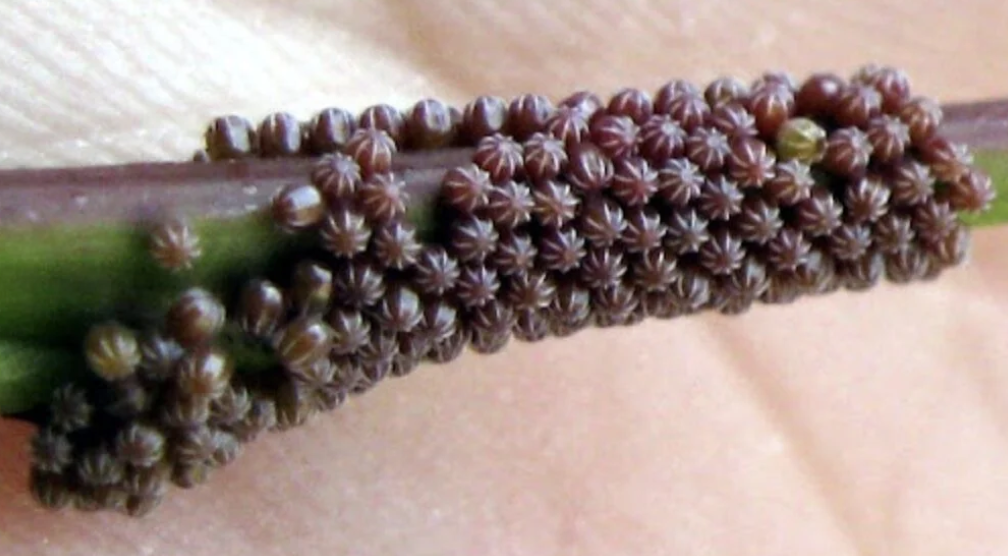
I recently came across an image circulating on social media that perfectly captures this sense of uncertainty. It startled me upon first glance. The picture depicted a leaf adorned with incredibly tiny, intricately designed black geometric shapes. At first, it seemed as if the leaf was wrapped in an otherworldly grid or maybe afflicted by some peculiar disease. Many, like me, were intrigued by what it could possibly represent.
After examining the situation, I determined that these unusual patterns are actually the eggs of Nymphalis Antiopa butterflies. If you are unfamiliar with this species, let me introduce you to it. The Mourning Cloak butterfly, Nymphalis Antiopa, is a captivating insect with a distinctive life cycle and some intriguing characteristics.First, let’s talk about the eggs. I came across a picture showing these eggs on a leaf in close-up. They look like a delicate layer of fine black lace spread across the surface. Once you get past the initial surprise, it’s quite beautiful. The eggs are laid in clusters, and each tiny egg displays flawless geometric patterns. My first thought upon seeing them was, “This could either be very beneficial or very harmful for my garden.”
As gardeners, we often focus on the immediate impact of insects on our plants. When we see caterpillars, we think, “Oh no, they’re going to eat everything!” But it’s important to take a step back and look at the bigger picture. The Nymphalis Antiopa butterfly shows us how nature balances itself out. Yes, the caterpillars will eat some leaves, but they’re not going to destroy your garden. In fact, by making a home for these butterflies, you’re helping to create a healthier ecosystem.So what should you do if you find these eggs or caterpillars in your garden? My advice is to let them be. Enjoy watching the process and the transformation. If you’re really worried about your plants, you can gently move the caterpillars to a tree or shrub where they’ll be happier and less likely to nibble on your prized flowers.