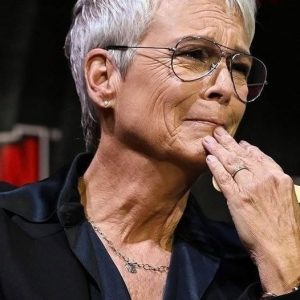
Actor Leslie Uggams has had a captivating career in both theater and film.
Despite having a stellar seven-decade career, the singer and actress from Harlem is most known for her part in the Deadpool series.
But, because her marriage to White Australian Grahame Pratt in 1965 defied all expectations for an interracial relationship, her life may be the subject of a movie behind closed doors.
In 1953, Leslie, a talented vocalist, recorded a song for MGM when he was just 10 years old. The renowned Julliard School of Music in New York and the Professional Children’s School of New York were recommended to her by her aunt, soprano Eloise Uggams.
However, her career was far from over after her musical breakthrough; in 1969, she hosted “The Leslie Uggams Show,” the first network variety show hosted by a Black person since “The Nat King Cole Show.”

However, she got to know and fell in love with actor Grahame Pratt behind the scenes. During one of Leslie’s famous tours in Australia, the pair reconnected in Sydney after first meeting as students at Professional Children’s School in New York.
Because she had dated a white man during her adolescence and her aunt had discouraged her from thinking about a future with him, Leslie was aware of the negative effects of dating a white man.
Leslie said to Ebony in 1967, “I remember the shock I felt once when I was dating a white boy.”
He sent me a color picture of himself via email. My aunt was shown it. He was a young, attractive man with gorgeous hair. I felt he was very attractive. However, my aunt started lecturing me after glancing at me. “Well, I guess he’s alright,” she remarked, “but only on dates, huh, honey?” When you’re ready to settle down for good, you’ll marry a nice [Black] fella, won’t you?
Leslie said that following their fortunate encounter, she kept going to see Grahame.
“At just 21 years old, it was unexpected that I started to fall in love with him.”
It would be a full year before she saw him again after she left Australia.
Leslie was worried about how her family would react and what would happen to them if Grahame had to move to the US for Leslie’s job, but despite her concerns, the two had fallen in love. When they’d been engaged for five months, Grahame went to see her in New York.
“I wanted to know if my family would really accept Grahame and not just tolerate him, knowing their views on mixed marriages,” the woman said.
Conversely, Leslie didn’t need to fear because Grahame was an Australian.

“Whereas many white Americans feel self-conscious about their circumstances, he didn’t.” He liked my pals, so he easily fit in with them. And both the men and the women thought well of him.
While residing in New York, Leslie claimed she received hate mail because of their marriage even though they didn’t experience the same racial difficulties as the rest of the nation.
In an interview with PEOPLE, Leslie said of her marriage, “It wasn’t as difficult as I anticipated.” “I think it’s because Grahame wasn’t a white man in America.” Naturally, though, we got mail.
Leslie said, “I sometimes get anonymous letters about being married to a white man when I go on tour in the United States.” “I remember getting one, of all places, in Detroit.” When it got to the club, it was addressed to “The Little Negro Entertainer.” They are unpleasant to read and are frequently discussed in that way.
As Leslie’s manager, Grahame assumed responsibility, and the couple welcomed two daughters, Danielle in 1970 and Justice in 1976.

Leslie got the lead role in the miniseries “Roots” by 1977, a year after the birth of their second child. For the series, she was nominated for an Emmy in the character of Kizzy.
She portrayed Lillian Rogers Parks in the miniseries “Backstairs at the White House” two years later, for which she was nominated for an Emmy in the Best Actress category.
She won a Daytime Emmy Award in 1983 for hosting the NBC game show “Fantasy,” and in 1996 she played Rose Keefer on “All My Children.”
On television programs like Family Guy, I Spy, Hollywood Squares, The Muppet Show, The Love Boat, and Magnum P.I., she has made appearances in her own right.
After fifty-five years of marriage with a granddaughter called Cassidy, Leslie and Grahame are still happily married.
“We have a lot of fun together, but it’s not always sunshine and roses,” Leslie remarked about her happy union. We have fun while we’re together.
These two’s love has endured the test of time and defied all expectations. They encourage each other since they are loyal to one another and have always helped one another.